


Mem Moment | Shiluach Haken: A Lesson in Compassion
Parashat Ki Teitzei “When You Go Out”
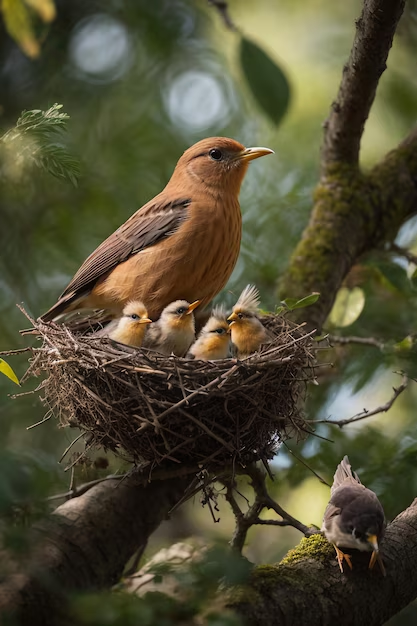
With an astounding 74 commandments (more than any other section of the Torah!), Parashat Ki Teitzei covers a wide range of laws, regulating the taking of people in captivity, finding lost property, roof safety, fair weights and more. One specific mitzvah, however, might stand out: the obligation of sending away a mother bird before taking her eggs or chicks (shiluach haken). Dvarim 22:6-7 states:
“If a bird’s nest happens to be before you…and the mother is sitting on the fledglings or on the eggs, you shall not take the mother with the young. You shall surely send away the mother, but the young you may take for yourself, so that it may go well with you and you may prolong your days.”
Why does the Torah highlight this act of kindness toward a bird, and why does it carry the significant promise of long life, a reward shared with the mitzvah of honoring our own parents? This delicate commandment invites us to consider the value of compassion in even the smallest moments of life and towards the most humble of creatures. Our Sages offer insights: in the Talmud (Chullin 142a), Rabbi Jacob teaches that this mitzvah cultivates mercy, training us to care for all of God’s creatures. Rambam (Maimonides) adds that it is also about preventing greed and overexploitation, by not taking more than we need. Ramban (Nachmanides) explains that the purpose is to instill compassion and prevent cruelty, as harshness can grow in a person’s soul if left unchecked. Rabbi Samson Raphael Hirsch suggests that the Torah calls us to learn from the mother bird’s devotion, awakening a sense of responsibility for the world around us, and particularly for vulnerable creatures.
So, is it about developing one’s own compassion by restricting our behavior, about ecological balance or about finding inspiration in nature? Regardless of the reason, in a world where the act of taking is often thoughtless, shiluach haken demands intention and care. Because even small acts – such as chasing away a bird to protect her from pain – might change the world.
What small acts of compassion can we practice daily, even in unnoticed moments? Where do we see “nests” in our world that need our care? How can showing mercy in fleeting moments shape our character and legacy?
May the mitzvah of shiluach haken inspire us to live lives of meaning with open hearts, seeing every encounter as an opportunity to nurture compassion and connect to the world in sincere and deep ways.