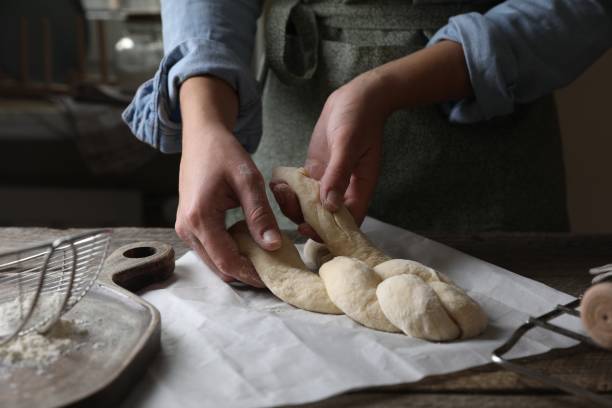
It’s Challah Time!
Why Do We Have Two Loaves of Challah for Shabbat?
They represent the double portion of manna that the Israelites had on Shabbat in the wilderness.
וַיְהִי בַּיּוֹם הַשִּׁשִּׁי לָקְטוּ לֶחֶם מִשְׁנֶה שְׁנֵי הָעֹמֶר לָאֶחָד וַיָּבֹאוּ כל־נְשִׂיאֵי הָעֵדָה וַיַּגִּידוּ לְמֹשֶׁה׃
On the sixth day they gathered double the amount of food, two omers for each; and when all the chieftains of the community came and told Moses, he said to them, “This is what ‘ה meant: Tomorrow is a day of rest, a holy sabbath of ‘ה. Bake what you would bake and boil what you would boil; and all that is left put aside to be kept until morning.” So, they put it aside until morning, as Moses had ordered; and it did not turn foul, and there were no maggots in it. Then Moses said, “Eat it today, for today is a sabbath of ‘ה; you will not find it today on the plain. Six days you shall gather it; on the seventh day, the sabbath, there will be none.” (Exodus 16:22-26)
Why Do We Cover Our Challah on the Shabbat Table?
:צָרִיךְ שֶׁתִּהְיֶה מַפָּה עַל הַשֻּׁלְחָן תַּחַת הַפַּת וּמַפָּה אַחֶרֶת פְּרוּסָה עַל גַּבָּיו
There needs to be a tablecloth on the table underneath the bread and another cloth spread out on top of the bread. (Shulkhan Aruch, Orach Chayim 271:9)
Another perspective:
“The cover represents the layer of dew that enclosed the manna and kept it fresh during the Exodus and also keeps the challah from being “shamed” by the fact that the wine is drunk before the bread is eaten during the Shabbat service. The cover also beautifies the challah.” (Maltz Museum)
What Is the Origin of Braided Loaves of Challah?
In the Torah we read of the Lechem HaPanim, or, the Shewbread.
וְלָקַחְתָּ סֹלֶת וְאָפִיתָ אֹתָהּ שְׁתֵּים עֶשְׂרֵה חַלּוֹת שְׁנֵי עֶשְׂרֹנִים יִהְיֶה הַחַלָּה הָאֶחָת׃
וְשַׂמְתָּ אוֹתָם שְׁתַּיִם מַעֲרָכוֹת שֵׁשׁ הַמַּעֲרָכֶת עַל הַשֻּׁלְחָן הַטָּהֹר לִפְנֵי ‘ה׃
וְנָתַתָּ עַל־הַמַּעֲרֶכֶת לְבֹנָה זַכָּה וְהָיְתָה לַלֶּחֶם לְאַזְכָּרָה אִשֶּׁה לַיה’׃
בְּיוֹם הַשַּׁבָּת בְּיוֹם הַשַּׁבָּת יַעַרְכֶנּוּ לִפְנֵי ‘ה תָּמִיד מֵאֵת בְּנֵי־יִשְׂרָאֵל בְּרִית עוֹלָם׃
You shall take choice flour and bake of it twelve loaves, two-tenths of a measure for each loaf. Place them on the pure table before ‘ה in two rows, six to a row. With each row you shall place pure frankincense, which is to be a token offering for the bread, as an offering by fire to ‘ה. They shall arrange them before ‘ה regularly every sabbath day—it is a commitment for all time on the part of the Israelites. (Leviticus 24:5-8)
What does the shewbread look like?
The rabbis of the Talmud debated on the appearance and mention that it could look like a rocking boat, or, a box with two parallel walls and open space between them. (BT Menachot 94b)
The origins of what we now call challah:
“So when did the term “challah” become the symbol-laden braided loaf of the Shabbat table? The first known connection appears in the 15th century, when Rabbi Joseph bar Moshe recorded the practice of the leading German sage of that time, Rabbi Israel Isserlein, of welcoming Shabbat with “three fine challot kneaded with eggs, oil, and a little water.” During this time, German and Austrian Jews’ Shabbat loaves copied the braided look from a German bread called berchisbrod or Holle—which sounded a lot like “challah,” according to the late Gil Marks’ Encyclopedia of Jewish Food. In a rite dating back to pre-Christian times, the Germans braided their bread to resemble the matted hair of a Teutonic demon named Holle. The bread was then thrown into the fire to escape the fury of the demon.” (George E Johnson, Moment Magazine.)
The Spiritual Component of Challah:
It is from the roots of the commandment [that it is that] since the sustenance of a person is through food and most of the world will be sustained with bread, the Omnipresent desired to give us merit with a constant commandment in our bread, so that blessing should rest upon it through the commandment; and through it, we will receive merit for our souls. And [hence] it turns out that the dough is food for our body and food for our soul. Additionally, [it is] in order that the servants of God, those that are constantly involved in God’s service — and these are the priests — should be sustained without any toil at all. Whereas with the tithe of the threshing floor there is labor for them, to pass the grain through the sieve and to grind it; here, their ration will come to them without any pain whatsoever. (Sefer HaChinukh 385:2)
What does it mean to ‘take challah’ when you’re baking challah?
דַּבֵּר אֶל־בְּנֵי יִשְׂרָאֵל וְאָמַרְתָּ אֲלֵהֶם בְּבֹאֲכֶם אֶל־הָאָרֶץ אֲשֶׁר אֲנִי מֵבִיא אֶתְכֶם שָׁמָּה׃
וְהָיָה בַּאֲכלְכֶם מִלֶּחֶם הָאָרֶץ תָּרִימוּ תְרוּמָה לַיהֹוָה׃
רֵאשִׁית עֲרִסֹתֵכֶם חַלָּה תָּרִימוּ תְרוּמָה כִּתְרוּמַת גֹּרֶן כֵּן תָּרִימוּ אֹתָהּ׃
מֵרֵאשִׁית עֲרִסֹתֵיכֶם תִּתְּנוּ לַיה’ תְּרוּמָה לְדֹרֹתֵיכֶם׃
Speak to the Israelite people and say to them: When you enter the land to which I am taking you and you eat of the bread of the land, you shall set some aside as a gift to ‘ה: as the first yield of your baking, you shall set aside a loaf as a gift; you shall set it aside as a gift like the gift from the threshing floor. You shall make a gift to ‘ה from the first yield of your baking, throughout the ages. (Numbers 15:18-21)
This portion of dough used to go to the priest when the Holy Temple was standing and there were still sacrifices. Now, this commandment has moved into taking a bit of dough and either burning it or getting rid of it in a respectful manner.
The Talmud teaches that there are five grains that need to be taken as challah. They are: wheat, barley, spelt, oats and rye. (Mishnah Challah 1:1)
Do you always take challah?
Generally, you take challah when you are baking a large quantity of dough.
It is important to note that there is some disagreement as to how big of a batch of challah you need to make to either take challah or take challah with a blessing. The citation below mentions 5-7 cups, yet other sources say that the measurement is 10 cups to take challah, and 14 cups to make the blessing. Still others say taking challah is done on batches larger than 15 cups. Taking challah is also done for large batches of any kind of dough of specified grains, not just challah dough.
“If the dough contains at least 1.666 kilo (a little more than 7 cups) of flour, one should take challah with a blessing. If the amount of flour in the dough is more than 1.2 kilo but less than 1.666 (5-7 cups), challah should be taken without a blessing.” (Institute for Torah and the Land of Israel)
RAMA: We customarily knead a quantity of dough that is sufficient to become obligated in the mitzvah of challah in the home. With these, we bake breads that we will then break on Shabbat and holidays. This is one of the [many ways] in which we honor Shabbat and holidays, and one must not deviate from this custom. (Shulkhan Aruch, Orach Chayim 242:1)
So, the taking of challah helps us honor Shabbat.
Is there a blessing for taking challah?
“Separating and blessing the challah is a simple process. Form the dough, knead it, and allow it to rise in a large bowl (or two smaller bowls if necessary). Before forming the dough into loaves, separate that olive-sized piece and roll it into a ball. If the dough is divided into multiple bowls, join the pieces for a moment by laying them side-by-side on the counter so they touch.” (From My Jewish Learning: https://www.myjewishlearning.com/recipe/taking-challah/)
Holding the piece of challah, say the blessing:
(בָּרוּך אַתָּה ה’ אֱלֹהֵינוּ מֱלֶךְ הָעוֹלָם אֲשֶר קִדְּשֳנוּ בְּמִצְוֹתָיו וְצִוָנוּ לְהַפְרִישׁ חַלָּה (מִן הָעִסָּה
Baruch atah Adonai Eloheinu melech ha’olam asher kidshanu b’mitzvotav v’tzivanu l’hafreesh challah (min ha’eesah)
Blessed are You, Adonai our God, Ruler of the Universe, who has sanctified us with commandments, and commanded us to separate challah (from the dough).
Immediately after separating it, hold the piece of dough in front of you and say:
הֲרֵי זו חַלָּה
Harei, zu challah
Behold, this is Challah.
More on Challah
The connection to making and eating challah runs deep and is integral to our lives as Jews. (HeyAlma – Baking My Mom’s Challah)
Challah baking, whether alone, or with a group can be uniting. During the pandemic, it took on even more significance and inspired many who had never made challah before to try it. (Jewish Chronicle – Everyone’s Making Challah)
- Do you have a connection with challah?
- What about this eggy braided bread has sustained the Jewish people for centuries?
- How can you take all these texts and traditions and make them your own?
- What is your favorite challah filling?
- Are you a sweet or savory challah eater?