Jewish Sign Language
Deaf Culture and the Deaf community are vibrant, with a rich history and culture, including their own Deaf theatre, art, language, music, schooling, and much more. This program can serve as a brief introduction, but we encourage you to learn more about Deaf history, especially within your local area or city!
Important Background Information
Just as there are numerous spoken languages spoken worldwide, there are over 300 different sign languages used worldwide. American Sign Language (ASL) is the primary form used in the United States, and even within the US there are different accents and dialects of ASL across regions and communities.
Though people sometimes think ASL is “English on the hands,” in fact signed languages are rarely related to spoken languages etymologically. ASL and English are fundamentally distinct languages. For example, American Sign Language and British Sign Language are not mutually intelligible. American Sign Language developed from a combination of French Sign Language, Plains Indian Sign Language, and Martha’s Vineyard Sign Language.
Israeli Sign Language is a visual-spatial dialect used by the Deaf community in Israel. Unlike Hebrew or Arabic, Israeli Sign Language is a young language, about 80 years old. Its sign vocabulary was enriched by the community over the decades, and the signs serve as the foundation the language is based on. It is most closely related to Polish and German Sign Languages. (For example, this video comparing and contrasting ASL vs. ISL)
Inspiration for Program Components
- Watch videos of ASL and ISL alphabets (below) and practice spelling out words
- Learn Jewish-related signs and discuss their origins
- Research which Jewish events in your area are accessible to the Deaf
- Reach out to your local Deaf club or center · Invite a speaker from the Jewish Deaf Resource Center
- Order food from a local Deaf-owned business
- Learn some basic ASL signs like “hello” and “thank you”
- Watch a Deaf-created film or a documentary about Deaf leaders
NOTE: Teaching sign language is a crucial and sensitive issue. Sign language is intertwined with Deaf culture, heritage, and history of the Deaf people, who have long been oppressed. It’s the core of their identity, culture, heritage, history, Deafhood, and pride. Most Deaf people appreciate that hearing people learn ASL (or any other signed language), but it’s inappropriate for hearing people to teach it online or offline. Learning a fingerspelling alphabet or a few Jewish signs is a great part of a program, but it should be combined with education about, and ideally from, the Deaf community.
Jewish Signs
It’s important to note that motion and direction are central components of signed languages, and just looking at pictures of signs won’t help you sign accurately.
Check out these videos for a better sense of the signs:
- Passover Signs Around the World
- Jewish Signs ASL by Steve Weiner
- Interpreting the Shema prayer in ASL
- Jewish signs an educated interpreter should know
Fingerspelling Alphabets
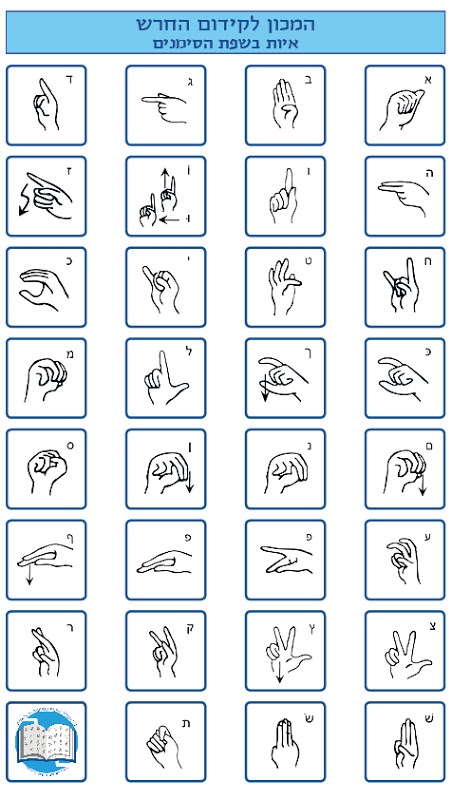
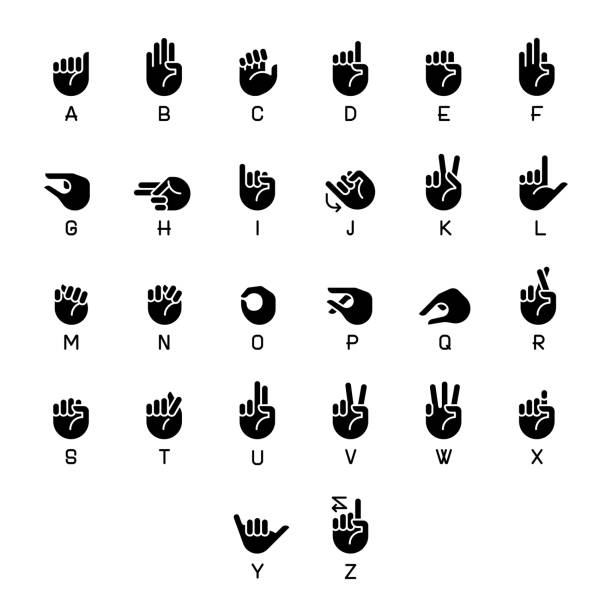
Fingerspelling is a way of spelling words using hand movements. Fingerspelling alphabets are primarily used for loan words from spoken-written languages, such as names of people and places for which there is not a sign. Fingerspelling alphabets do not always develop or spread in the same ways as signed languages. Although ASL and ISL are not closely related, their alphabets are part of the larger French-origin fingerspelling family.
- What similarities do you notice between ASL and ISL alphabets?
- What similarities do you notice between written and fingerspelled letters?
It’s important to note that motion and direction are central components of signed languages, and just looking at pictures of signs won’t help you sign accurately. Check out these videos of the ASL alphabet and ISL alphabet for a better sense of the signs.