


Food
Jews and Chinese Food
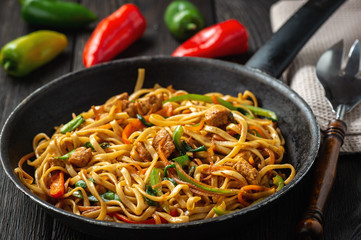
Why is Chinese Food on Christmas Eve a Thing?
Google trends have shown that the search for ‘Chinese restaurant open’ is greater during the week of Christmas than any other week of the year!
It goes back to the Lower East Side of New York and the proximity of Jewish and Chinese Immigrants
| Why Do Jewish People Eat Chinese Food on Christmas, NPR |
| In a conversation on All Things Considered with Rabbi Joshua Plaut: “Yes. Jews eating at Chinese restaurants goes back to 1899, when the American Jewish Journal – a weekly publication – criticized Jews for eating at non-kosher restaurants and singling out Jews who flocked to Chinese restaurants. So, this marriage between Jews and Chinese food really goes back to when Jews and Chinese people were immigrants in the United States.” The first mention of Chinese food on Christmas has been “At least since 1935, according to The New York Times, which cites that a man by the name of Eng Shee Chuck brought chow mein on Christmas Day to the Jewish Children’s Home in Newark, N.J. That’s the first written citation of Jews eating Chinese food on Christmas.” |
- Did you know this tradition was so old?
- How do you think the immigrant experience played a part in this tradition?
Availability on Christmas
| Chinese Religions and Philosophies, National Geographic |
| “Confucianism, Taoism, and Buddhism are considered the “three pillars” of ancient Chinese society. As philosophies and religions, they not only influenced spirituality, but also government, science, the arts, and social structure.” |
- Christianity, Islam and Chinese Folk Religion are also a part of the religious makeup of China. This mix of religions means that many Asian people don’t celebrate Christmas, leaving restaurant owners more available to open on Christmas Eve.
| Nothing is More American Than Chinese Food on Christmas, Lillian Li, NY Times |
| “In “A Kosher Christmas,” Rabbi Joshua Plaut writes that Jewish customers were welcome in Chinese restaurants because “Chinese owners and waiters had no history of prejudice toward Jews.” It makes sense that Chinese restaurants were a destination for Jewish families on Christmas — they were among the only ones open, both literally and metaphorically.” |
- The accessibility of Chinese food restaurants offering pick-up, delivery and dine-in has also elevated this trend.
- Having a place to go on Christmas can help avoid some of the isolation that Jews feel on Christmas when most places are closed.
- The yummy food is a highlight for Jews, what do you think the Chinese food restaurant owners feel about this tradition?
Jewish Dietary Laws and a shared tendency for lactose intolerance
| Why China developed a fresh taste for milk, Veronique Greenwood, BBC |
| “For many generations, Chinese adults mostly ignored milk, seeing it as a food for children or the elderly. And there’s a biological reason why it took so long to catch on. China’s appetite for milk has exploded in recent years. The nation of nearly 1.4 billion people is now the world’s second largest consumer of dairy products, and imports are flying over the border, with dairies from New Zealand to Germany topping off the behemoth’s demands for milk. An intriguing little detail in all this frothy commerce is that many people in China, like much of Asia, are lactose intolerant. Human children produce an enzyme that allows them to digest milk, but in much of the world, its levels taper off as they grow up. People of European descent are somewhat unusual in that they mostly continue to digest dairy effortlessly as adults. In China, a much-cited study estimated that 92% of adults had trouble absorbing lactose” |
| The Jewish History of Beano and Lactaid, Joanna O’Leary, Nosher |
| “For many Jews, a sensitive stomach is genetic. According to some studies, an estimated 75% of all Jews cannot digest lactose (milk sugar); one review of 110 Jewish Israeli youth found, for example, that 62% were “lactose malabsorbers.” Ernest Abel, professor of obstetrics and gynecology at Wayne State University and author of “Jewish Genetic Diseases: A Layman’s Guide,” further asserts that gastro-intestinal disorders, such as irritable bowel syndrome, are disproportionately common in the Jewish population. Ashkenazi Jews are also two to four times more likely to be afflicted with Crohn’s disease, a condition in which the digestive tract is chronically inflamed.” |
- While there is often pork in Chinese cooking, the avoidance of dairy offers Jews the ability to separate meat from milk.
- This avoidance of meat and milk and the love for Chinese food have also brought about an increase in the number of Kosher Chinese restaurants.
- Many Jews use Christmas as an opportunity to help the greater community and volunteer on Christmas. Having an open Chinese food restaurant offers a communal
place to go after or before volunteering. Does this enhance the volunteering? Change the experience? - Having Chinese food on Christmas has become a part of Jewish tradition – becoming part of Jewish culture like Lox and Bagels. What do you think of this tradition?
- Does this background information help you think about it in a different way?
- What’s your favorite Chinese food dish?
- Do you have another favorite tradition on Christmas?