


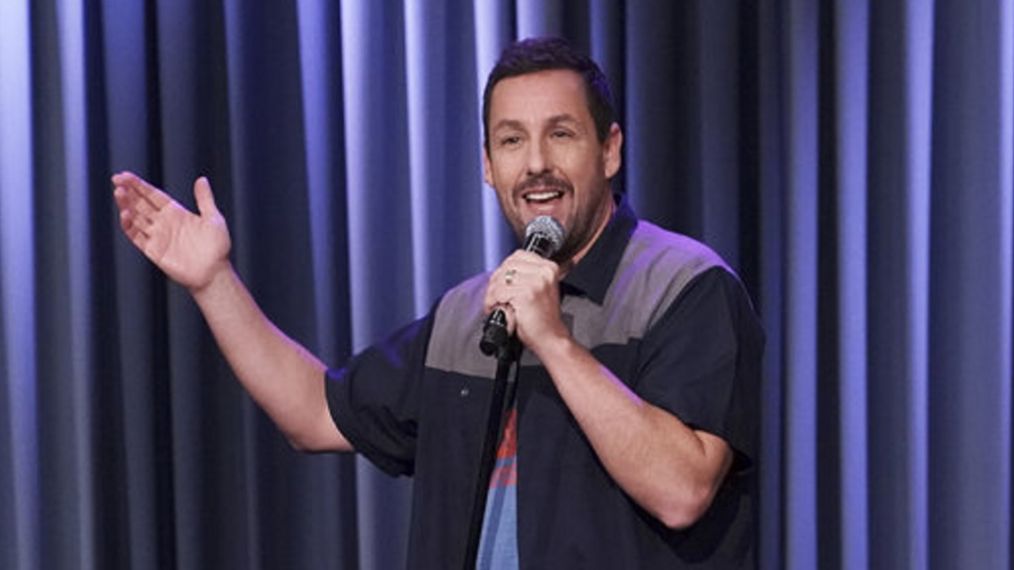
Jews in Comedy: A Pre-Show Warm Up
INTRODUCTION:
Humor has been a part of Jewish tradition for thousands of years. Humor can help us forget our troubles, poke fun at ourselves, lighten a situation, or convey a truth in an easier to relate way. This program creates a Jewish framework for an open mic or comedy show program.
PROGRAM OUTLINE (15 – 20 minutes):
- [part one] Framing (2 min)
- [part two] Comedian ranking (8 min)
- [part three] Sarah’s laugh text talk (6-7 min)
MATERIALS:
- Rankings of Jewish comedians
- Text with Sarah’s laughter
- Existing comedy structure (open mic or comedy show)
[part one] Framing
- Before the show starts, we’re going to put this in a Jewish context. First, I’m going to share a few legendary Jewish comedians, and we get to talk about who we know and how we rank them. Then we’re going to throw back 2,000 years to a famous laugh and talk about why Jewish laugh in the first place. Then it’s on to the show…
[part two] Comedian Ranking
* Think about reading them out of order so they can lean into guessing the rankings *
- 1) Mel Brooks – Classic writer, director, and actor known for parody and satire — Works include Blazing Saddles, Young Frankenstein, Spaceballs — and one of the few EGOT winners (Emmy, Grammy, Oscar, Tony). Ranking: #1 on Ranker’s “100+ Funniest Jewish Comedians Ever” crowd list
- 2)Gene Wilder – Classic Actor, screenwriter, director, and author with a gentle, eccentric charm — best known as Willy Wonka, and a frequent Mel Brooks collaborator on Young Frankenstein and Blazing Saddles. Ranking: 2 on the same Ranker list
- 3) Billy Crystal – Well-known Actor and comedian whose work spans stand-up, film, and hosting; a fixture of the modern comedy canon. Ranking: #3 on Ranker’s “Funniest Jewish Comedy Actors” list
- 4) Jerry Seinfeld – Well-known. Built a sitcom pitched as being “about nothing” that ended up being about everything — one of the most influential comedic voices in shaping modern sitcom comedy. Ranking: Consistently ranked among the most influential in the canon across lists
- 5) Sarah Silverman – A more modern comedian. Often called “the female Lenny Bruce”; known for a satirical, deadpan style that takes on social taboos — racism, sexism, homophobia, politics, religion. Ranking: High-ranking modern entry on Ranker’s list
- 6) Amy Schumer – Another modern comedian. A frequent presence on “funniest Jewish comedians” lists; her placement is one of the most argued-over on Ranker’s crowd list — a genuinely good one to poll your room on. Ranking: Currently the most divisive entry on Ranker’s “100+ Funniest Jewish Comedians” list
Questions:
- How many of these comedians have you seen their work?
- Do you agree with rankings?
- Are there long-standing contributions to our world because of these comedians?
[part three] Sarah’s Laugh Text Talk
Text One: Genesis 18:12
| וַתִּצְחַק שָׂרָה בְּקִרְבָּהּ לֵאמֹר אַחֲרֵי בְלֹתִי הָיְתָה־לִּי עֶדְנָה וַאדֹנִי זָקֵן׃ |
| And Sarah laughed to herself, saying, “Now that I’ve lost the ability, am I to have enjoyment—with my husband so old?” |
Question: What do you think is going on with Sarah at this moment? Why the laughter?
(Some possibilities include disbelief, sarcasm, pain, anger, confusion)
Text Two: Genesis 21:6
| וַתֹּאמֶר שָׂרָה צְחֹק עָשָׂה לִי אֱלֹהִים כׇּל־הַשֹּׁמֵעַ יִצְחַק־לִי׃ |
| Sarah said, “God has brought me laughter; everyone who hears will laugh with me.” |
Question: Is Sarah’s laughter different here? What do you think this one is about? Is the tone the same?
The word for laugh (Tzahok) is the same in both texts and then becomes a part of Isaac’s name (Yitzhak).
Conclusion: As Sarah teaches, we’ve been laughing for thousands of years. Either in disbelief, to protect our emotions, or for pure joy. Are you ready to carry on the laughing tradition?
Optional: If you want to delve deeper because you have more time, or after the show. Or, because you want to know more about Jewish humor here are more in-depth definitions and ideas.
A brief history of Jews in comedy:
Old World roots: Long before stand-up existed, Yiddish literature carried a sharp comic tradition — Sholem Aleichem’s stories (the basis for Fiddler on the Roof) paired hardship with wit, a style critics call “laughter through tears.”
Vaudeville and the Borscht Belt (early–mid 1900s): Vaudeville was the dominant form of American live entertainment from roughly the 1880s–1930s — variety shows mixing comedy, music, and novelty acts on a single bill, playing theaters across the country. The Borscht Belt refers to the cluster of Jewish-owned resort hotels in New York’s Catskill Mountains, so named for the beet soup associated with the Eastern European Jewish guests who vacationed there. Jewish comedians built early stand-up and vaudeville material out of Yiddish language and culture, often naming Jewish stereotypes themselves as a way of defusing them. The Catskills’ “Borscht Belt” resort circuit became a training ground for generations of Jewish comics.
Mainstream crossover (mid–late 1900s): Comedians like Mel Brooks and Gene Wilder brought that sensibility into film, while others moved Jewish comic voices further into the American mainstream.
The Seinfeld turning point (1990s): Birthright’s history of Jewish comedy points to Seinfeld as a pivot — one of the first major shows to bring specifically Jewish culture to a broad, non-Jewish audience without hiding or softening it.
Modern and diversifying (2000s–today): A new generation — Sarah Silverman, Amy Schumer, and others — took the tradition further, tackling taboo and political material directly, while shows like Broad City carried older comic archetypes (like the schlemiel) into new, often female-led territory.
Jewish humor is older than any comedian on this list. Columbia professor Jeremy Dauber, author of Jewish Comedy: A Serious History, argues that Jewish humor stretches back to the Bible itself and traces a direct line “from the Book of Esther to Seinfeld and Curb Your Enthusiasm,” running through Sholem Aleichem, Franz Kafka, the Marx Brothers, and Joan Rivers along the way. His central point for tonight: there is no single “Jewish joke” — the tradition is as varied as Jewish history itself, which is exactly why six comedians from six different decades can all plausibly claim the title of funniest.
“Laughter through tears” has a name and a history. Sholem Aleichem — sometimes called the “Jewish Mark Twain” — wrote the Tevye stories that became Fiddler on the Roof, and critics have long described his signature style as laughter through tears: comedy that doesn’t erase hardship but sits right next to it. That’s effectively the same move Sarah makes in Genesis, just dressed in a shtetl instead of a tent.
The “schlemiel” is a specific Jewish comic archetype — and it’s still working today. Yiddish literature gave us the schlemiel: a lovable, self-deprecating figure who stumbles through misfortune, found in the work of Sholem Aleichem and later generations of Jewish writers and performers. Scholars have traced that same archetype into Broad City, where the show’s comic sensibility has been described as a kind of “schlemiel feminism” — proof the tradition keeps adapting rather than disappearing.
The jokes changed when the audience did. Birthright’s own piece on Jewish comedy traces the arc from vaudeville and early-20th-century stand-up — where comedians often built material from Yiddish language, culture, and Jewish stereotypes, partly to defuse those stereotypes by naming them first — through to comedians tackling broader political and social material as they entered the mainstream. It calls Seinfeld a turning point: one of the first shows to bring specifically Jewish culture to a broad, non-Jewish audience without hiding it.
Citation links:
“From Sholem Aleichem to ‘Broad City,’ scholar presents tradition of Jewish humor”
“From Seinfeld to Silverman: Comedy and Jewish Culture”
The 100+ Funniest Jewish Comedians Ever, Ranked
25 Funniest Jewish Comedians in History | Aish