On Tap: A Jewish Beer Tasting Program
INTRODUCTION:
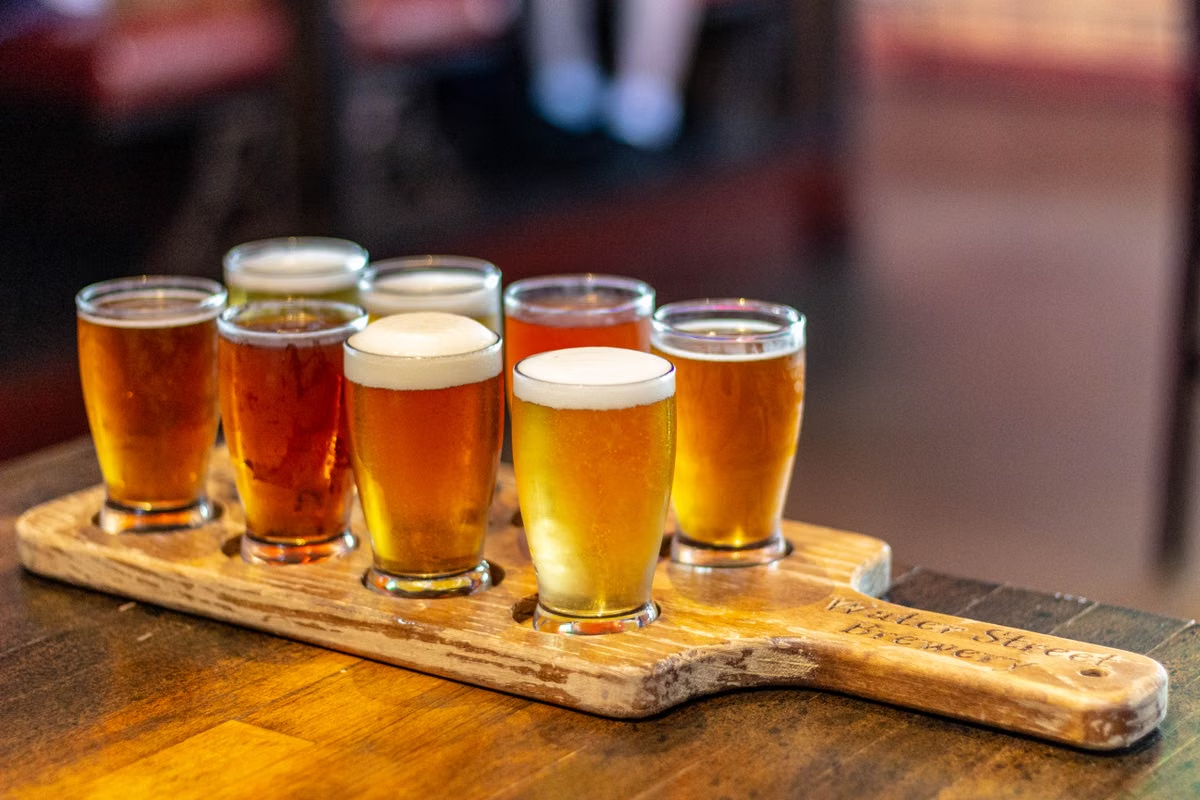
This fall/football season/social program pairs Jewish texts with a flight of beers and NA options designed for social connection and Jewish learning.
PROGRAM OUTLINE:
- Welcome (5 minutes)
- Opening Framing (5 minutes)
- Tasting Flight — 4 rounds, ~10 min each (40 minutes)
- Closing L’Chayim & Reflection (10 minutes)
MATERIALS:
- 4 beers spanning different styles (e.g., a lager, an amber/Oktoberfest-style for fall, an IPA, a stout or porter)
- Note for Kosher beers: Plain, unflavored beers are typically fine by default. Flavored, spiced/pumpkin, or stout-style beers (often made with lactose, a dairy ingredient) should carry a visible kosher symbol (OU, OK, or Star-K). Check labels when shopping for the flight, especially for anything spiced or a stout.
- 2–3 non-alcoholic beer options, so no one has to choose between drinking or sitting out
- Tasting cups (2–3 oz pours per person per round)
- Palate cleansers: water, pretzels, or plain crackers
- Pitchers / water station
- He-Brew: Beer Resource Sheet
[part one] Opening Framing (5 minutes)
- This program helps us learn that beer shows up in ancient Jewish texts, and in Jewish ritual practice, not as a side note but as something the tradition actually discusses. This program will allow us to jump into beer tasting as a way to learn about these texts.
- Program should also start with quick beer facts, and blessing for beer. (From resource sheet)
Blessing (said together before this round):
Baruch atah Adonai, Eloheinu melech ha’olam, shehakol nihyah bidvaro.
“Blessed are You, who brings all things into being.”
[part two] Tasting Flight: (40 minutes)
- There are meant to be about four rounds. Each round pairs one beer (or non-alcoholic option) with a short Jewish text or fact and a discussion prompt using the resource sheet. Participants taste the beer, hear the text and then discuss using question on resource sheet, or their own.
Round 1 —The Talmud mentions four kinds of different beers (Talmud Pesachim 107a:6)
Beer isn’t a stretch or a novelty next to Torah and Talmud. The Talmud records four different types of beer: date beer, barley beer, fig beer, and berry beer.
Discussion prompt: Which of these four ancient “beers” sounds most (or least) appealing to you?
Round 2 — Beer for ritual practice: Beer for Havdalah (Talmud, Pesachim 107a:3)
In ancient Babylonia — where much of the Talmud itself was written — the Talmud relates that the warehouses of beer in Babylon were like the warehouses of wine in Palestine. Jewish communities have always adapted daily life and ritual to whatever their environment offered.
Discussion prompt: Where do you see that kind of adaptation in Jewish life today?
Round 3 — Beer as preservative and antiseptic (Talmud, Avodah Zarah 31b:11)
The rabbis obviously knew a lot about brewing and hops. Have you considered that beer/beer knowledge was that old before? Does beer have other healing or medicinal powers?
Round 4 — What did the Rabbis know about hangovers? And L’Chayim: To Life (Talmud Pesachim 107a:9 & Shabbat 67b:16)
Jewish tradition doesn’t treat alcohol as simply good or bad — it treats it seriously. Before drinking, Jews traditionally toast l’chaim, “to life,” in part because drinking can lead to either camaraderie and good cheer, or to hurt feelings and shame. Also, using the text about what rabbis knew about hangovers reminds us of the intentionality of not drinking.
Discussion prompt: What does “drinking with intention” look like in your own community or friend group?
[part three] Closing L’Chayim and Reflection (10 minutes)
- Shared toast using the L’Chayim text and a quick round of one thing people learned or noticed that they’re taking away with them.