Food, High Holidays
Using the Foods of Rosh Hashanah to Teach About the Holiday
KNOW:
Participants will walk away learning foods associated with Rosh Hashanah. They will also understand how the foods are associated with the themes.
FEEL:
They will feel full with yummy foods. They will feel inspired to make the year 5785 a good year, one where they enter into it with a whole heart.
DO:
They will eat many different types of foods and discuss why it relates.
WHO:
- This program can be adapted to almost any number. You can have small portions, or make foods (like fish and lamb and carrots), in large quantities.
- This program can be done before Rosh Hashanah to get everyone in the spirit of the holiday, or it can be done on the holiday itself. As long as food is prepared in advance, this can be fully Shomer Shabbat, or it can incorporate music, power points presentations, and cutting of pomegranates which could make it not as accessible for those who are fully Shomer Shabbat.
WHAT/WHERE:
- Materials:
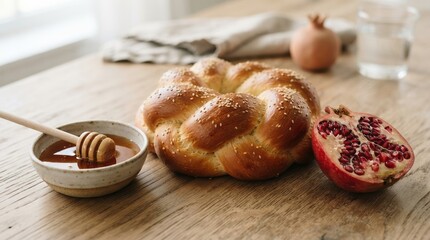
- Variety of foods including, leeks, beans, beets, dates, Pumpkin, Figs, Round challah, pomegranates, fish lamb, exotic fruits.
- Text sheet with the foods of Rosh Hashanah
- Plates, knives, napkins, cards listing foods.
- Room Set Up:
- Depending on how you do this program, it can be a sit-down meal where participants take turns reading a pre-printed card that tells about the food, where it originates and how it relates to Rosh Hashanah. Or, you can have stations where guests count pomegranate seeds, roll round challah, and/or sample foods while they mingle.
PROGRAM OUTLINE: (As long or short as you want)
- Beginning is a welcome for Rosh Hashanah, and discussing the Shulkhan Aruch passage about foods synonymous for Rosh Hashanah
- Middle is food tasting or pomegranate seed counting or round challah making
- The end is wrap up asking participants how they are going to use these foods to inspire them for the new year.
PROGRAM DETAILS:
Beginning
- The Shulkhan Aruch details many foods that should be included for the holiday, such as leeks, beans, beets, dates, pumpkin, pomegranate. Using the discussion questions, facilitate learning of that text.
Middle
- Choose your own adventure:
- If you do this as a food tasting, you can have stations set up around the room and have a card printed in advance that details the food, how it’s prepared, and the way it relates to Rosh Hashanah and one of the themes. Ie, head of the fish or lamb for going headfirst into new year. Or pomegranate seeds for a year filled with mitzvot.
- If you do this as more of an interactive program, you can have stations set up where participants get to learn how to braid a circular challah or cut open a pomegranate and count the seeds.
- If you do this as a Rosh Hashanah potluck, you can circulate a specific food and a recipe and ask guests to bring one of the items. Ie, beet salad, glazed carrots, pumpkin bars or bread, cheese stuffed figs, etc.
End
- Wrap up program with people sharing which food inspired them to do or try something new for the new year.