

Mem Moment | Grief and Hope
Tisha b’Av
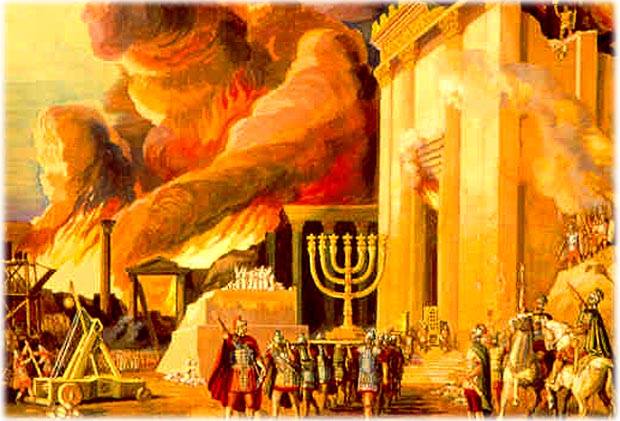
Tisha b’Av is the saddest day on the Jewish calendar. It is a day of fasting and reflection as we remember major destructions in our history: the First Temple in 586 BCE, the Second Temple in 70 CE, and other tragedies that befell the Jewish people, including the expulsion from Spain in 1492.
A powerful story in the Talmud (Makkot 24a-b) takes place some time after the destruction of the Second Temple. Four great Jewish leaders – Rabban Gamliel, Rabbi Joshua, Rabbi Eleazar ben Azariah, and Rabbi Akiva – were walking among the ruins of Jerusalem when they saw a fox emerging from the place where the Holy of Holies had once stood. The first three rabbis began to cry upon seeing it, but Rabbi Akiva laughed. Bewildered, his friends asked Rabbi Akiva why he reacted that way. Rabbi Akiva answered: “The prophets foretold two things. One, that Jerusalem would be destroyed, and foxes would walk through its ruins. The other, that one day the streets of Jerusalem would again be full of old men and women sitting peacefully, and boys and girls playing. Now that I see the first prophecy fulfilled, I am certain that the second one will also come true.” His friends responded: “Akiva, you have comforted us. Akiva, you have comforted us.”
I love this story for two reasons. First, it exemplifies two distinct attitudes we can have toward pain and destruction. The first one – that of the three rabbis – is human and even necessary: to mourn deeply what has been lost. But Rabbi Akiva shows us a different possibility: to look at the same ruins and see in them the seeds of future rebuilding. To see in them the certainty that, with time and work, things will one day be better.
Secondly, this story reminds me of what we do every day at Mem Global. We build communities not only for celebration and good times, but also to hold each other in moments of difficulty, uncertainty and sadness that are a natural part of life. In those moments, having a strong community where we can truly be ourselves makes all the difference.
May we all merit – like Rabbi Akiva – to hear our friends tell us: “You have comforted us, you have comforted us.”