

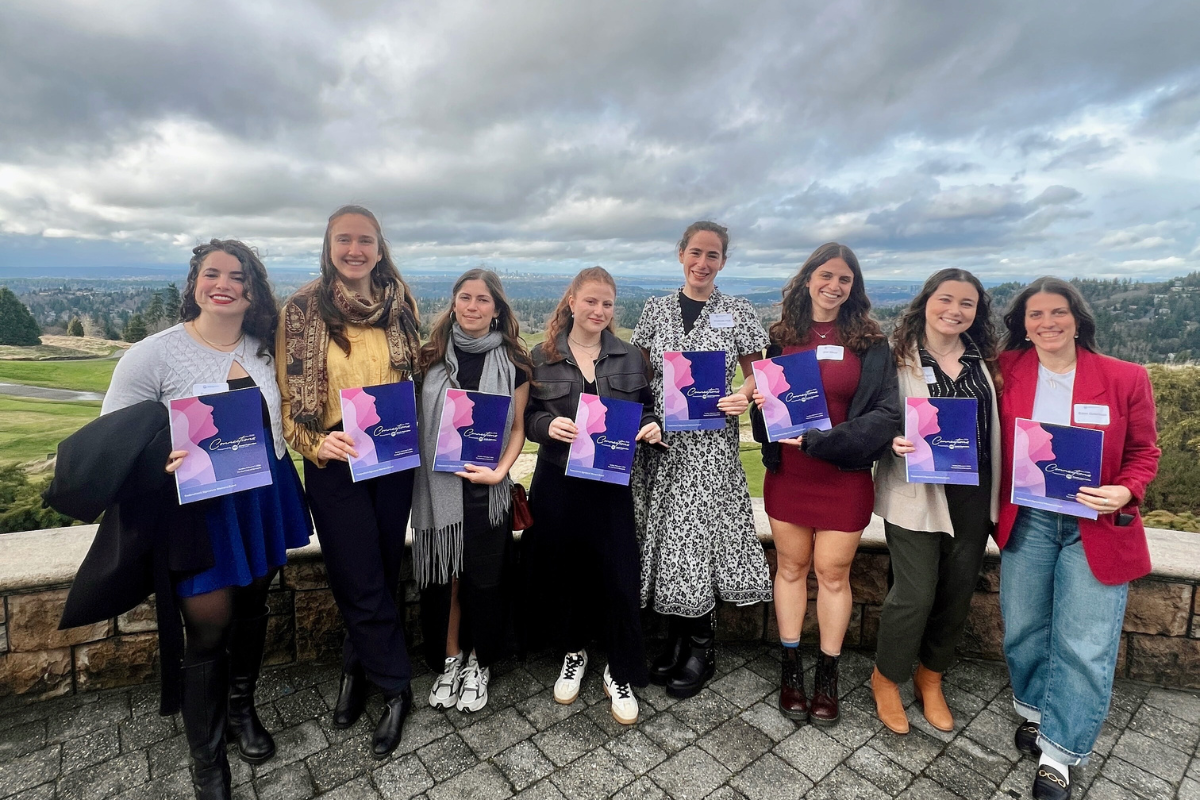
Visibility and Belonging: How I Discovered the Power in Jewish Women’s Spaces
I have always felt that there is something almost indescribably magical about Jewish women’s spaces. Whether it is a challah bake, standing in a circle during Friday night candle lighting, dancing hand in hand to Miriam’s Song, or joining Women of the Wall at the Kotel, I feel a sense of deeply rooted belonging and connection. These spaces hold memory, resistance, and joy simultaneously.
When I joined my Moishe House back in 2022, though, our program photos would make my friends and family raise an eyebrow at how few women were there. It was a trend I had noticed myself but had been hesitant to name. What if I was overthinking it? I decided to ask my Community Manager if I could host a program for only our women-identifying Community Members to see if they have noticed it, too, and to find out what might be causing it.
Why do many young Jewish professionals come to Moishe House events? Community and friendship, yes. Free food – it doesn’t hurt! But for some, there is also often the hope of meeting a future Jewish partner. During my first women-only program, however, I learned that this was actually what was turning many young Jewish women away: the idea that even one introductory conversation had the expectation that you might marry the man in front of you.
As a recent college graduate, used to spending weekends playing matchmaker at parties, this was a wake-up call for me. At the end of each month, when planning the following month’s programming, I began asking: What makes a space feel welcoming? Who feels represented? What responsibility do I carry? How can I build a sustainable and meaningful community, one that is safe and energizing for women in my community?
Over the next few years, I sought to foster and nurture spaces where women feel seen, comfortable, and excited to show up. Sometimes, that looked like hosting women-only gatherings. Other times, it has meant being more thoughtful about the types of programming we offer, and who is centered. It has been an imperfect and sometimes halting process, but always deeply intentional.
So, when I got an email about the Seattle Jewish Federation’s annual Women’s Fundraiser, I needed to make sure that the women in our Moishe House community could be there. I came to the event not just hoping to support the Federation’s efforts, but to build connections with other Jewish women in our broader Seattle community and to better understand what women-led Jewish spaces look like across generations.
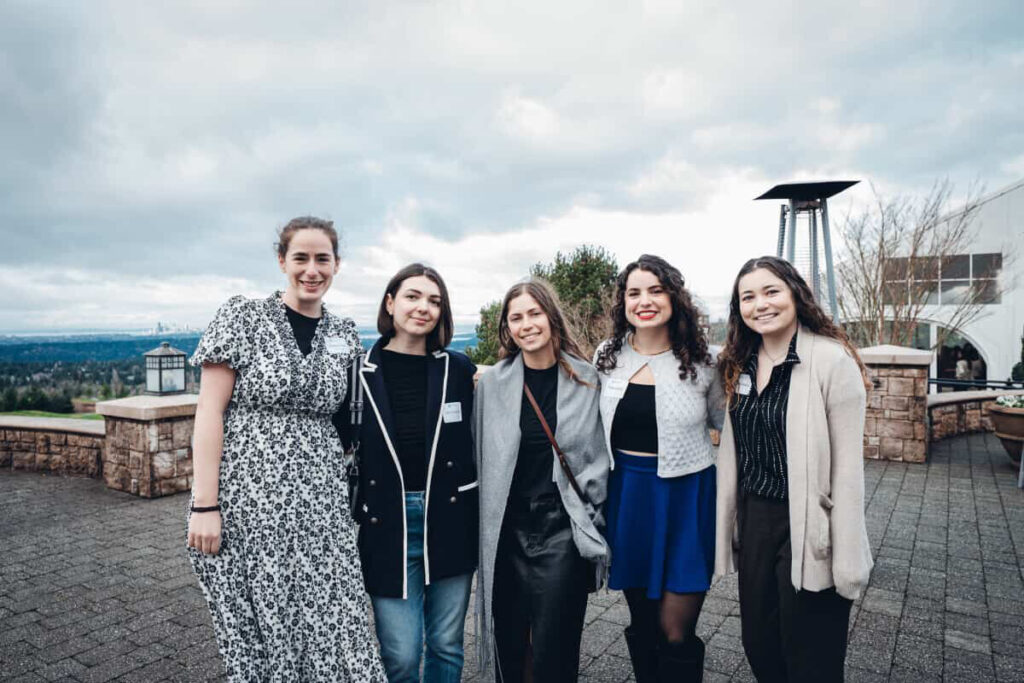
As each Moishe House Community Member walked into the fundraiser, they came up to me and said some variation of, “Wow! I didn’t realize how many Jewish women there were in Seattle.”
Sometimes, we don’t realize the fullness of our community until we are in spaces designed intentionally to highlight and celebrate it. As I’ve learned in my time as a Resident, visibility changes belonging. Representation changes participation. Connection changes who feels like they have a place at the table.
Surrounded by Jewish women who were investing in the future of Jewish life in so many different ways, I kept thinking about the quiet and not-so-quiet ways women build Jewish community in Seattle. Not just financially, though that impact is enormous, but relationally, spiritually, and communally. That morning felt like both a celebration and a reminder that Jewish community is sustained through intentional connection and leadership that often happens behind the scenes and across generations.
The Federation’s Women’s Fundraiser reminded me that creating Jewish spaces is not just about filling rooms. It is about leading events where people feel ownership, belonging, and invested in what comes next. It made me think about how I show up as a Moishe House Resident and what it means to create programming that reflects the diversity and strength of Jewish identity, especially for women and gender-diverse Jews who have historically had to carve out space within communal life.
In 2026, when I see photos of our events, I see a community that is more diverse and intentional than when I first became a Resident in 2022, and whose members support one another in ways that go far beyond programming. I see Community Members who attend events for friendship, spirituality, leadership, learning, meeting potential partners, or simply the comfort of being surrounded by people who understand them. And I’m proud to see women helping to shape our community: leading events, bringing their friends, and creating new traditions.