


Mem Moment | Doves of Repentance, Arks of Language
Parashat Noach
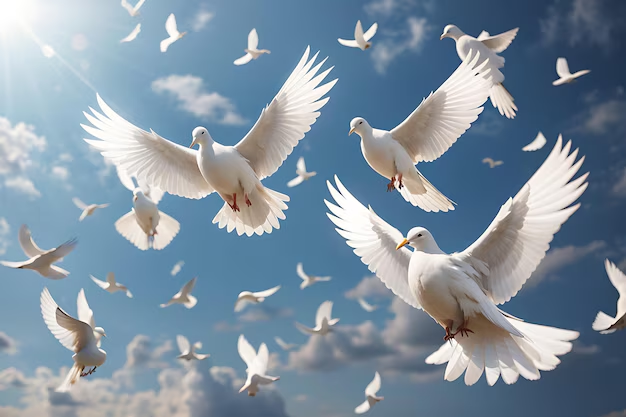
I am writing this on the morning of Kol Nidre, and so my thoughts about Parashat Noach are intertwined with questions about teshuvah (return/repentance) and the book of Jonah which we read on Yom Kippur. There are some striking similarities between the stories of Jonah and Noah. Jonah’s name in Hebrew, “Yonah” is the same word used to refer to the dove sent out after the flood. Both Jonah and Noah are called upon by the Divine to respond to the potential destruction of immoral people in the world. Both end up engulfed by the ocean – one in a giant fish one, one in a giant ark – and have a little glimmer of light in this enclosed space.
And yet the differences are crucial. I see Jonah and Noah as two models of how to respond to major crises caused by human immortality and cruelty. Noah was a tzaddik, a person who pursued justice, by living a life of integrity and protecting animals amidst the overwhelming flood. He built a floating refuge to weather the storm. The Hebrew word for ark – teivah – can also mean “word” which makes me think about how language can be a protective refuge for us in the troubling times we live. Jonah, on the other hand, at first runs away from his calling to bring the people of Nineveh to repentance but eventually turns towards the task at hand. He has difficult conversations and supports people to change their ways. Reluctantly and having been swallowed by a giant fish, he becomes a dove of peace and reconciliation.
As we begin this new year, where do we need to be like Noah, to build our arks of words and community to protect ourselves and those precious to us?
Where do we need to be like Jonah, to go out and confront those we disagree with and lovingly support them to change?