


Mem Moment | What is Real Joy?
Sukkot “Festival of Booths”
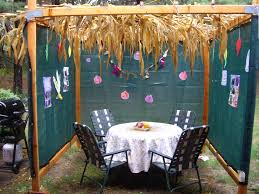
On Sukkot, Jews around the world eat meals and spend time in temporary dwellings (sukkot) to remember the Israelites’ wandering through the desert. Some even sleep in them. This seemingly uncomfortable holiday has been known for centuries as a time of celebration – it’s even called Zman Simchatenu (Time of our Rejoicing) and is celebrated with food, drink, song and dance.
It’s obvious that Sukkot’s rejoicing is not rooted in immediate pleasure or even physical comfort. So where does it come from? As usual, we have several explanations. One is Sukkot’s connection to the agricultural cycle. Sukkot falls at the end of the harvest period and it makes sense to feel joy when granaries are full and hard labor has paid off. Early Zionists focused on this theme, and spent Sukkot celebrating the connection between the people and the land. Another view connects Sukkot’s joy with the relief that the Days of Awe, with their intense introspection and fear of judgement (particularly on Yom Kippur), had ended.
But the medieval scholar Maimonides proposes another explanation, based on the Torah’s commandment for Sukkot: “You shall rejoice in your festival… with the stranger, the fatherless, and the widow in your communities” (Deut. 16:14).
Maimonides says: “While eating and drinking, one must feed the stranger, the orphan, the widow, and other downtrodden. Anyone who locks the doors of his courtyard and eats and drinks alone with their family… does not observe a religious celebration but indulges in the celebration of his stomach.”
We should not confuse joy with indulgence: real happiness comes from helping others celebrate with dignity. On Sukkot, we are reminded that we came from nothing, and that many still struggle today. May we be inspired to open our sukkot and our hearts so that we all experience real joy.