


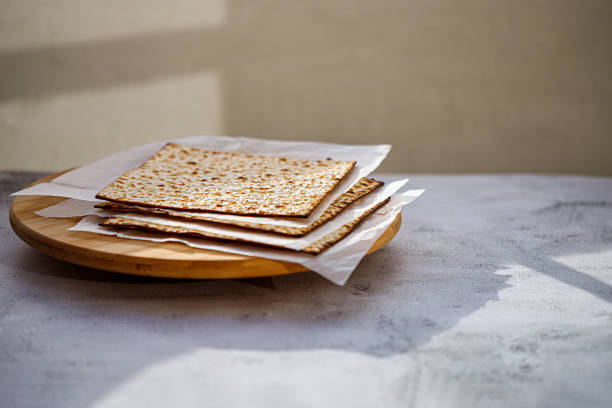
Get Your Passover Prep On: Making Matzah and Bedikat Chametz
First the Cleaning
Passover spring cleaning is a great way to not only prepare your home for Passover, it’s also a great once a year get rid of things you don’t need.
According to the Talmud, you need to search your home on the evening of the 14th of Nisan. Which makes it the night before the 1st seder – so one full night before Passover starts. For reference sake, the first day of Passover is the 15th of Nisan (April 1, 2026) which means seder begins at sundown the night before.
There is a long debate in the Talmud (Jewish law) that asks if it’s permissible to search only in the evening, or can one continue the next morning as well? Tradition holds that we search in the evening. Though, the next morning you may still eat chametz, at least until midday. Check out these texts…
תָּא שְׁמַע, דְּתָנֵי דְּבֵי שְׁמוּאֵל: לֵילֵי אַרְבָּעָה עָשָׂר בּוֹדְקִין אֶת הֶחָמֵץ לְאוֹר הַנֵּר. אַלְמָא ״אוֹר״ אוּרְתָּא הוּא.
Come and hear another proof, as it was taught in the school of Shmuel: On the evening of the fourteenth of Nisan, one searches for leavened bread by candlelight. Apparently, or is evening, as this baraita replaces or with the word evening. (Babylonian Talmud Pesachim 3a: 8)
Another explanation for why the evening, and why with a candle?
The Gemara cites an answer to its initial question of why the search for leaven is not conducted in the morning. Rav Naḥman bar Yitzḥak said: One searches for leaven in the evening as it is a time when people are found in their homes, and they have the opportunity to perform the search. And furthermore, the light of the lamp is favorable for conducting a search specifically at night. As the search is conducted with a lamp, it is preferable to search at night. (Pesachim 4a:7)
Now that the rabbis have clarified that you must search for leaven in the evening, they are occupied with the idea of how long you can eat leaven before Passover begins. They also teach how we can get rid of chametz (leaven)
***Chametz is any food created by allowing grain (specifically wheat, oat, spelt, rye or barley) and water to ferment and rise. This is often referred to as “leaven.”
We learned in a Mishna there, that Rabbi Meir says: One may eat leaven on the fourteenth day during the entire first five hours of the day, and he burns the leaven at the beginning of the sixth hour. Rabbi Yehuda says: One may eat leaven for the entire first four hours of the day, and one leaves it in abeyance during the fifth hour, at which point eating leaven is prohibited but it need not be burned yet, and one burns the leaven at the beginning of the sixth hour. Everyone agrees, in any case, that leavened bread is prohibited by Torah law from the sixth hour and onward. (Pesachim 4b:8)
Remind us again where did this conversation even begin?
The answer: The Torah
In the first month, from the fourteenth day of the month at evening, you shall eat unleavened bread until the twenty-first day of the month at evening. No leaven shall be found in your houses for seven days. For whoever eats what is leavened, that person—whether a stranger or a citizen of the country—shall be cut off from the community of Israel. (Exodus 12:18-19)
The breakdown:
- Step 1: Do your Passover cleaning.
- Step 2: In the evening of the day before 1st Seder, use a candle (or flashlight), and check for any leaven in your home (Called bedikat chametz)
- Step 3: On the morning of the 14th day, you can eat leaven until the 6th hour (so generally until around 11am CST).
- Step 4: Soon after you have your last bites of chametz, you must burn any remaining leaven in your possession, which is generally around 11:45am CST. (Called biyur chametz)
- From 12pm until seder time you aren’t supposed to have leaven or matzah. Bring on the fruits and veggies!
A candle, wooden spoon, and a feather.
It’s not from CLUE, rather, it’s how we search for leaven.
- The candle is for light to see the crumbs.
- The feather is to sweep away the crumbs.
- The wooden spoon is so that if you don’t find any leaven, you still have something to burn for biyur chametz. You would burn the whole spoon.
Why do you think this is so prescribed?
Do you see the merit of this practice?
What is the rationale for not eating matzah or chametz until seder?
What modern day twists can you come up with for these rituals?
Now that we’ve cleaned… Here comes the Passover Food
Matzah:
We learn that chametz occurs when any of the five grains come in contact with water and are able to ferment and rise. How long until fermenting takes place? 18 minutes is believed to be the cut off. According to Jewish law, Matzah must be made within 18 minutes. Though, there is some variation in the belief that it’s 18 minutes from process start until baking, vs 18 minutes from start until the end of baking.
But…. The idea of 18 minutes isn’t explicitly stated in the Talmud. Rather, the rabbis stressed the idea that you can’t let anything rise.
And the Rabbis say: Three women may be engaged in preparing dough as one, in the following manner: One kneads her dough as another one arranges her own dough, so it takes the form of matza, while another one bakes her dough. (ie, meaning that they are always working with the dough and it’s not sitting) Rabbi Akiva says: Not all women, not all wood, and not all ovens are the same, and therefore no set rules should be established. Rather, this is the principle: If the dough begins to rise, she should spread cold water in which she immersed her hands, onto the dough, to stop the leavening process. (Talmud Pesachim 48b:8-9)
So where do we get the notion of 18 minutes:
Answer: It comes from the Shulchan Aruch, written by Joseph Karo in the 16th century, CE
One should not leave the dough unkneaded even for a moment. Whenever one is kneading it even the entire day, it will not leaven. If one leaves it unkneaded for the rate of [time passed when traveling] a ‘mil’, it’s chametz. The rate of a ‘mil’ is a quarter of an hour and a twentieth of an hour [18min/1mil]. (Shulchan Aruch, Orach Chayim 459:2
18 Minutes is key, and the water and the flour can matter too!
As with most elements of Jewish life and tradition, there are different levels of observance and practice. There are those that are more lenient and those that are stricter. There is regular matzah, and shmurah matzah
There are different levels of Flour
From the Orthodox Union: “All wheat flour used in matzah production must be continually supervised. While kosher supervision of Passover flour used for “regular” matzah begins prior to its milling, the flour used in “shmurah” (watched) matzah is supervised from the time that the wheat is harvested in the field. Wheat can only be used to make matzah flour if it has been inspected against any signs of moisture. The flour mill, bins, and transport vessels must be koshered for Passover; and any equipment used for chametz-milling which cannot be adequately cleaned, must be effectively sequestered.
Even the temperature of the water maters
Water to be used in matzah baking must be left to stand overnight (to ensure that it is allowed to cool). This water is then referred to as mayim shelanu (water which has “slept”).” (Rabbi Yaakov Horowitz, What is Matzah? – Kosher for Passover (oukosher.org))
Have you ever stopped to think about the temperature of the water needed to make matzah before?
Where does the idea of intent come in? Would all these steps make it prohibitive to make your own matzah? How do you reconcile this?
Egg Matzah tastes much better. Can I eat that instead?
The Torah says that we eat matzah for Passover. In fact, 10 times that Torah mentions matzah.
לֹא־תֹאכַ֤ל עָלָיו֙ חָמֵ֔ץ שִׁבְעַ֥ת יָמִ֛ים תֹּֽאכַל־עָלָ֥יו מַצּ֖וֹת לֶ֣חֶם עֹ֑נִי כִּ֣י בְחִפָּז֗וֹן יָצָ֙אתָ֙ מֵאֶ֣רֶץ מִצְרַ֔יִם לְמַ֣עַן תִּזְכֹּ֗ר אֶת־י֤וֹם צֵֽאתְךָ֙ מֵאֶ֣רֶץ מִצְרַ֔יִם כֹּ֖ל יְמֵ֥י חַיֶּֽיךָ׃
You shall not eat anything leavened with it; for seven days thereafter you shall eat unleavened bread, bread of distress—for you departed from the land of Egypt hurriedly—so that you may remember the day of your departure from the land of Egypt as long as you live. (Deuteronomy 16:3)
In this case, the Torah mentions the bread of distress, or affliction — The Lechem Ani. Matzah is called the poor person’s bread.
According to the Shulkhan aruch, this answers the question of can you eat egg matzah? While egg matzah is Kosher for Passover throughout the week of Passover for the elderly, the sick, and children, it is called matzah ashirah, the rich person’s bread. It doesn’t fulfill the mitzvah of eating matzah for seder.
The Shulchan Aruch also teaches that we have to eat enough Matzah at the seder Passover to recite the blessings. The appropriate amount is an olive’s worth. (Shulchan Aruch 475:1)
Why do some people avoid matzah ball soups, matzah kugel and matzah brei for Passover?
This is a concept called Gebrokts. The sages teach that once matzah has been baked, even if it comes in contact with water, it doesn’t turn into chametz. However, there is a stringency expressed in the text that says that there might be extra flour that wasn’t baked in the matzah and it could turn into chametz. Therefore, there are some who avoid any kind of soft matzah or matzah pieces that could be mixed with a liquid. This is called non-Gebrokts and generally is practiced among the Hasidic communities. https://oukosher.org/passover/articles/gebrokts-not-just-a-half-baked-idea/
What do you do to prepare yourself and your home for Passover?