


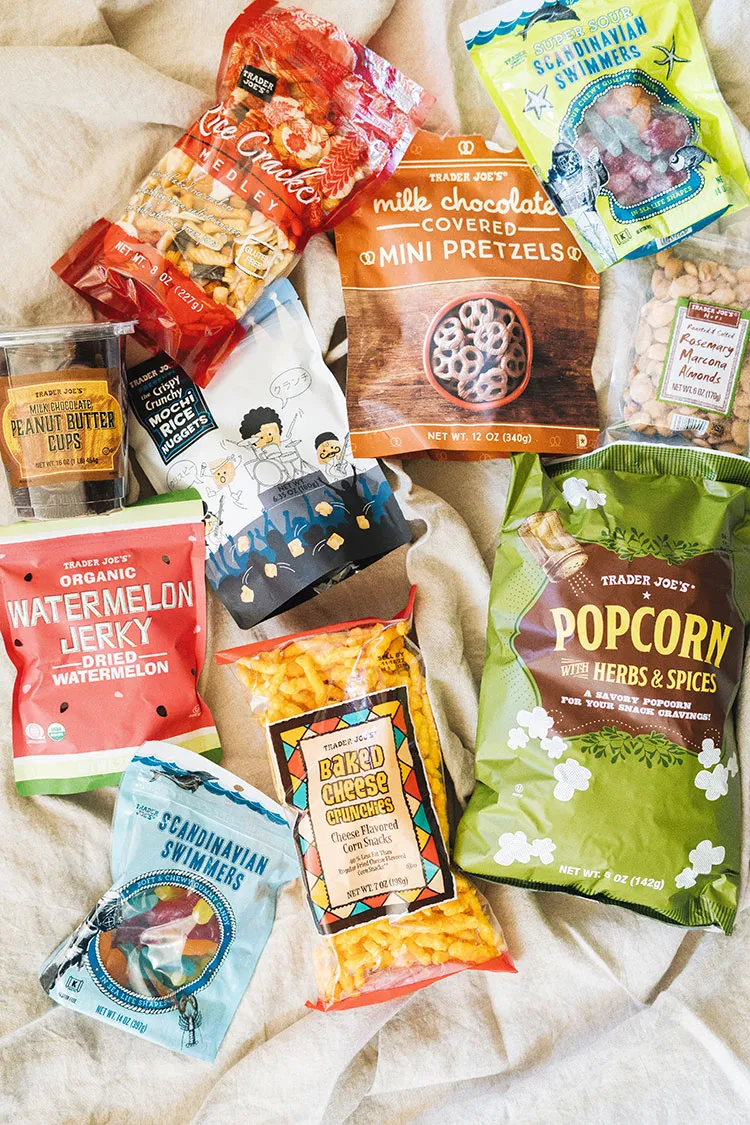
Trader Joe’s Taste-Testing and Trivia
Purchasing the snacks
1. Bring this list to your local Trader Joe’s
2. Find products that contain the “answer” foods as primary ingredients (examples are provided) – you may not want or be able to purchase everything, so make a note of which clues you’ll be using.
3. Purchase your snacks
Prepping the activity
1. Print out the clue posters for the clues you’ll be using and put them up around the room
2. Create a Clue Sheet like this one with the clues you’ll be using, blank columns for “answer” and “product,” and a preset “ratings” column and print out one for each participant
3. Set up a buffet table with all the TJ’s snacks. Be sure to keep the boxes visible too!
During the program
1. As participants arrive, hand them a Clue Sheet and encourage them to talk to each other to figure out the answers, each of which will be a primary ingredient of one of the TJ’s snacks on the table.
2. After everyone has arrived and had a chance to guess, begin the Taste Testing portion of the activity. As you go through each TJ’s snack, share which clue/s it’s related to and have participants make notes on their own ratings.
| ANSWER | CLUE | TJ PRODUCT EXAMPLES |
| Cauliflower | Although technically all plants are kosher, some particularly scrupulous Jews avoid this one out of concern that its florets are too tightly packed to be properly inspected for insects. | – Cauliflower Gnocchi – Gluten Free Cheese Pizza – Cauliflower Broccoli Patties |
| Peanut | Consumption of the Israeli snack Bamba provided the key evidence that early introduction, rather than avoidance, lessons allergies to this common food. | – Peanut Butter Caramel Coated Popcorn – Peanut Butter Filled Pretzel Nuggets – Crustless Peanut Butter & Strawberry Jam Sandwiches |
| Cream cheese | This food, considered an expensive delicacy to newly-immigrated Jews, became essential to second-gen New Yorkers with more financial security | – Everything But the Pizza Whipped Cream Cheese Spread – Pumpkin Cheesecake – Spicy & Sweet Creamy Pepper Dip |
| Coffee | A Hagadah produced by a major company in 1932 as an advertisement for this food’s kosher status is now one of the world’s most popular. | – Mocha Latte Pretzels – Dark Chocolate Coffee Buzz Bar – Chocolate-covered espresso beans |
| Honey | Many American Jews eat apples with this food on Rosh HaShanah to symbolize a sweet new year. | – Hot Honey Popcorn – Hot Honey Fudge – Chocolate Honeycomb Candy |
| Rosemary | Because of this plant’s strong smell, it was widely used for cleansing and memory function. In both Sephardic and Ashkenazi traditions, it’s considered one of the strongest protections against the evil eye. | – Rosemary Croissant Croutons – Raisin Rosemary Crisps – Nuts About Rosemary Mix |
| Almond | These trees are the first to bloom each spring in Israel, making them a symbol of renewal and awakening. That’s likely why its Hebrew name, “sha-ked,” means “watchful”. | – Maple Brown Butter Almonds – Almond Ginger Sesame Granola – Almond Chipotle Dip |
| Ginger | This delicious root is listed in the Talmud (Pesachim 42b) as one of a handful of herbal remedies, along with long peppers and aged wine, which can be used to heal every part of the body. | – Sparkling Cranberry Ginger Brew – Almond Ginger Sesame Granola – Triple Ginger Snaps |
| Olive | In the story of Noah’s ark, a bird returning with a branch of this plant signals hope, redemption, and the start of recovery. | – Fig & Olive Crisps – Fried Olive Bites – Green Olive Italian Lingue Crackers – Lemon Stuffed Olives |
| Cherry | The common Jewish surname “Kirsch” comes from the Yiddish name for this fruit tree which has native varieties in both Europe and the Americas. | – Tart Cherry & Pecan Shortbread Cookies – Homestyle Cherry Pistachio Pecan Granola – Black Cherry Vanilla Sparkling Water |
| Ricotta cheese | Spanish Jews had a tradition of frying cheese in butter for Hanukkah. After the Expulsion in 1492, many Sephardim settled in Rome, where they used this local food to create the traditional Hanukkah cassola. | – Spinach & Ricotta Raviolini – Baked Lemon Ricotta Cheese – Cranberry Orange Dip |
| Grape | While kiddush is traditionally recited over a drink made from this fruit, almost any beverage can be used so long as it’s special or important – including beer, whiskey, tea and coffee. | – Dolmas – Gluten Free Cranberry Raisin Toasts – Raisin Rosemary Crisps |
| Pomegranate | Jewish tradition teaches that this fruit has 613 seeds, representing the 613 commandments of the Torah. (In actuality, they have a wide range of seeds, from around 200 to over 1,400.) | – Sparkling Pomegranate Punch – Sparkling White Tea with Pomegranate Juice – Green Tea Blueberry & Pomegranate Beverage |
| Parsley | This vegetable is the most common fresh green used on seder plates to represent renewal and fertitility. | – Parsley Crackers – Greek Chickpeas with Cumin and Parsley |
| Lemon | The etrog, a citron fruit used during the holiday of Sukkot, is one of the primary ancestors of this modern, much more well known fruit. | – Lemon Stuffed Olives – Lemon Bars – Lemon Cookie Thins – Baked Lemon Ricotta Cheese – Ginger Lemon Probiotic Sparkling Beverage |
| Orange | A special variety of this fruit, named after the city of Jaffa where it was first produced for export, was developed by Arab farmers and became an integrated Jewish-Arab business venture in the 1800s | – Cranberry Orange Dip – Blood Orange Mochi – Dark Chocolate Orange – Dark Chocolate Orange Sticks |
| Strawberry | An Israeli farmer holds the Guiness World Record for the heaviest ever grown, at 289 grams (10+ oz) and over 7 inches long. | – Crustless Peanut Butter & Strawberry Jam Sandwiches – Freeze Dried Strawberry Pieces – Sour Strawberry Candy Belts |
| Cinnamon | This spice was offered as a main part of the Temple incense sacrifice, considered one of the holiest because it barely took physical form. | – Creamy Toscano Cheese Dusted with Cinnamon – Mini Cinnamon Sugar Cookies – Cinnamon Buns – Sweet Cinnamon Filled Korean Pancakes |